
Discover 25 best customer engagement software solutions in 2026 to improve communication, strengthen customer relationships, boost loyalty, and grow your business.
Introduction
Customer engagement software helps businesses communicate with customers, understand their needs, and build stronger long-term relationships. These platforms can support activities such as email marketing, live chat, customer messaging, personalization, feedback collection, and automated communication. In 2026, modern customer engagement software is also using AI, analytics, and automation to help businesses deliver more relevant experiences across different channels. Choosing the right solution can help companies improve customer satisfaction, encourage loyalty, and create more consistent engagement throughout the customer journey.
Customers today expect more than just a product or service. They want fast responses, personalized experiences, and meaningful interactions. If your business fails to deliver this, they will quickly move to a competitor.
This is why customer engagement software has become essential. It helps businesses connect with customers across multiple channels, understand their needs, and build long-term relationships.
Instead of reacting to customers, you can engage with them at the right time, in the right way. This leads to higher satisfaction, better retention, and increased revenue.
In this guide, you will learn everything about customer engagement software, how it works, and how to choose the best tools for your business.
What Is Customer Engagement Software
Customer engagement software is a platform that helps businesses interact with customers through different channels such as email, chat, social media, and mobile apps.
It collects data from customer interactions and uses it to improve communication. This allows businesses to deliver personalized experiences and build stronger relationships.
For example, when a customer visits your website, engagement software can track their behavior and send targeted messages based on their actions.
This creates a seamless experience that feels natural and helpful.
Why Customer Engagement Matters
Customer engagement is not just about communication. It is about building trust and creating value for your customers.
Engaged customers are more likely to stay loyal, make repeat purchases, and recommend your business to others.
Research shows that businesses with strong customer engagement strategies see higher revenue and better customer retention.
When customers feel valued, they are more likely to choose your brand again and again.
Key Features of Customer Engagement Software
Modern customer engagement platforms offer a wide range of features that help businesses connect with their audience.
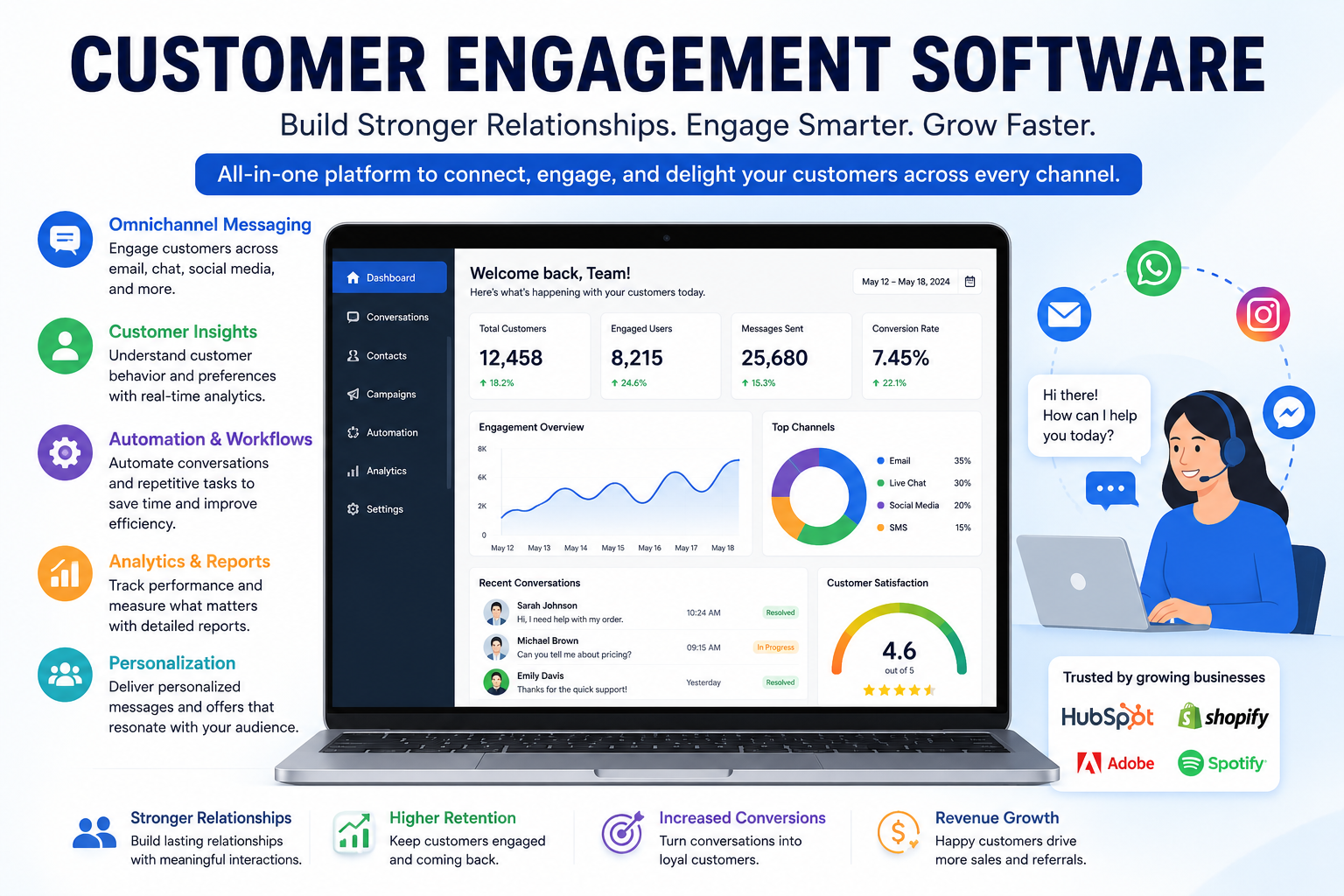
These features include real-time messaging, automation, analytics, and personalization. Each feature plays a role in improving the overall customer experience.
For example, automation allows you to send messages at the right time, while analytics helps you understand customer behavior.
Together, these features create a powerful system for building relationships.
Omnichannel Communication
Customers interact with businesses through multiple channels. They may start on social media, move to your website, and then contact support through email.
Customer engagement software brings all these channels together in one place.
This ensures that your communication is consistent and seamless. Customers do not have to repeat themselves, and your team has a complete view of their journey.
Omnichannel communication improves efficiency and creates a better experience.
Personalization and Customer Experience
Personalization is one of the most important aspects of customer engagement.
Customers expect businesses to understand their preferences and provide relevant content.
Engagement software uses data to personalize messages, offers, and recommendations.
For example, an ecommerce store can suggest products based on browsing history. A SaaS company can send onboarding emails tailored to user behavior.
Personalization makes customers feel valued and increases engagement.
Automation and Workflows
Automation helps businesses save time and improve efficiency.
Instead of manually sending messages, you can create workflows that trigger actions based on customer behavior.
For example, when a customer signs up, they can automatically receive a welcome email. If they abandon a cart, they can receive a reminder.
Automation ensures that no opportunity is missed and that customers receive timely communication.
Analytics and Insights
Data is the foundation of effective customer engagement.
Analytics tools provide insights into customer behavior, preferences, and interactions.
You can track metrics such as open rates, click-through rates, and conversion rates.
This helps you understand what works and what needs improvement.
With these insights, you can optimize your strategies and achieve better results.
Real-Time Chat and Support
Customers expect quick responses. Real-time chat allows you to provide instant support.
Customer engagement software includes chat features that enable businesses to respond quickly to customer queries.
Some platforms also use AI chatbots to handle common questions.
This reduces response time and improves customer satisfaction.
Customer Feedback and Surveys
Understanding customer feedback is essential for improvement.
Engagement software allows you to collect feedback through surveys and reviews.
This helps you identify strengths and areas for improvement.
Listening to customers shows that you value their opinions, which builds trust.
Integration with Other Tools
Customer engagement software often integrates with other tools such as CRM systems, marketing platforms, and analytics tools.
This creates a unified system where all data is connected.
Integration improves efficiency and ensures that your team has access to accurate information.
It also helps you create more personalized and effective campaigns.
Benefits of Customer Engagement Software
Customer engagement software offers many benefits for businesses.
It improves communication, increases customer satisfaction, and builds loyalty.
It also helps you understand your audience better and make data-driven decisions.
Most importantly, it drives growth by increasing conversions and retention.
Real-Life Example
A growing ecommerce brand implemented customer engagement software to improve communication.
They used personalized email campaigns and automated messages based on customer behavior.
Within a few months, they saw a significant increase in repeat purchases and customer satisfaction.
Another company used live chat to provide instant support, reducing response time and improving user experience.
These examples show how powerful engagement tools can be.
How to Choose the Right Software
Choosing the right customer engagement software depends on your business needs.
Start by identifying your goals. Do you want to improve communication, increase retention, or boost sales?
Next, consider the features you need. Look for tools that offer automation, personalization, and analytics.
Ease of use and scalability are also important factors.
It is a good idea to test different tools before making a decision.
Customer Engagement for Ecommerce
Ecommerce businesses rely heavily on customer engagement.
Features like personalized recommendations, email marketing, and chat support can significantly increase sales.
Engagement software helps create a smooth shopping experience from start to finish.
This leads to higher conversions and customer loyalty.
Customer Engagement for SaaS
SaaS companies focus on user onboarding and retention.
Customer engagement software helps guide users through the onboarding process and keep them engaged.
Features like in-app messaging and personalized emails improve user experience.
This leads to higher retention and long-term growth.
Role of AI in Customer Engagement
Artificial intelligence is transforming customer engagement.
AI tools can analyze data, predict behavior, and automate interactions.
For example, chatbots can handle customer queries, while AI recommendations can personalize content.
This improves efficiency and enhances the customer experience.
Common Challenges
While customer engagement software offers many benefits, there are also challenges.
One challenge is managing large amounts of data.
Another challenge is ensuring consistent communication across channels.
Businesses must also focus on data privacy and security.
Choosing the right tool and strategy can help overcome these challenges.
Future of Customer Engagement Software
The future of customer engagement is driven by technology and personalization.
AI and automation will continue to play a major role.
Businesses will focus more on delivering seamless and personalized experiences.
Voice technology and real-time communication will also become more important.
Companies that adapt to these trends will stay ahead of the competition.
Conclusion
Customer engagement software is no longer optional. It is essential for building strong relationships and growing your business.
By using the right tools, you can improve communication, personalize experiences, and increase customer satisfaction.
This leads to higher retention, more sales, and long-term success.
Now is the time to invest in customer engagement software and take your business to the next level.
Start exploring your options and create a strategy that works for your audience.
FAQs
What is customer engagement software
Customer engagement software is a platform that helps businesses interact with customers and improve communication across different channels.
Why is customer engagement important
It helps build trust, increase loyalty, and improve customer satisfaction, leading to higher revenue.
Is customer engagement software expensive
Costs vary depending on features, but many tools offer affordable plans for small businesses.
How does engagement software improve sales
It improves communication, personalizes experiences, and increases customer retention.
Which businesses need customer engagement software
Any business that interacts with customers can benefit, including ecommerce, SaaS, and service-based companies.
