

Learn 15 powerful CRM marketing strategies in 2026 to improve customer relationships, personalize campaigns, increase retention, and drive business growth.
Introduction
Building strong customer relationships is essential for businesses that want to grow in a competitive digital market. CRM marketing combines customer data, personalized communication, automation, and targeted campaigns to create better experiences at every stage of the customer journey. Instead of sending the same message to everyone, businesses can use CRM insights to understand customer needs and deliver more relevant content and offers. In 2026, an effective CRM marketing strategy can help businesses improve engagement, strengthen customer loyalty, increase conversions, and support long-term growth.
Every business wants loyal customers. But in today’s crowded digital world, loyalty doesn’t happen by chance. It comes from meaningful connections, timely communication, and a deep understanding of customer needs. This is where CRM marketing becomes a powerful tool.
In 2026, CRM marketing has become a cornerstone of successful business strategies, helping companies build stronger customer relationships and drive long-term growth. By leveraging customer data, automation, and personalized communication, CRM systems enable businesses to understand their audience, improve engagement, and increase retention. Whether you’re a small business or a large enterprise, an effective CRM marketing strategy can streamline your sales and marketing efforts while delivering better customer experiences. In this guide, we’ll explore how CRM works and how it can transform your business growth.
CRM marketing blends customer relationship management with smart marketing strategies. It helps businesses track interactions, understand behavior, and deliver personalized experiences that turn leads into long-term customers. Whether you run a small business or manage a growing brand, CRM markiting can transform how you connect with your audience.
In this guide, you’ll learn what CRM marketing is, why it matters, and how to use it effectively to grow your business.
What Is CRM Marketing?
CRM marketing is the use of customer relationship management systems to plan, execute, and optimize marketing campaigns. It focuses on using customer data to build stronger relationships and deliver personalized communication.
At its core, CRM markting helps businesses collect and analyze customer data such as purchase history, browsing behavior, preferences, and interactions. This data allows marketers to create targeted campaigns that speak directly to individual customers instead of using generic messaging.
CRM marketing goes beyond simple email campaigns. It includes automation, segmentation, customer journey mapping, and real-time engagement.
Why CRM Marketing Matters in Today’s Digital World
Modern customers expect personalized experiences. They want brands to understand their needs and offer relevant solutions. CRM marketing makes this possible.
Businesses that use CRM marketing effectively often see higher engagement rates, better customer retention, and increased sales. According to industry reports, companies that leverage CRM systems can improve customer retention by up to 27 percent.
CRM marketing also helps businesses stay organized. Instead of managing customer data across multiple tools, everything is stored in one central system. This improves efficiency and reduces errors.
How CRM Marketing Works
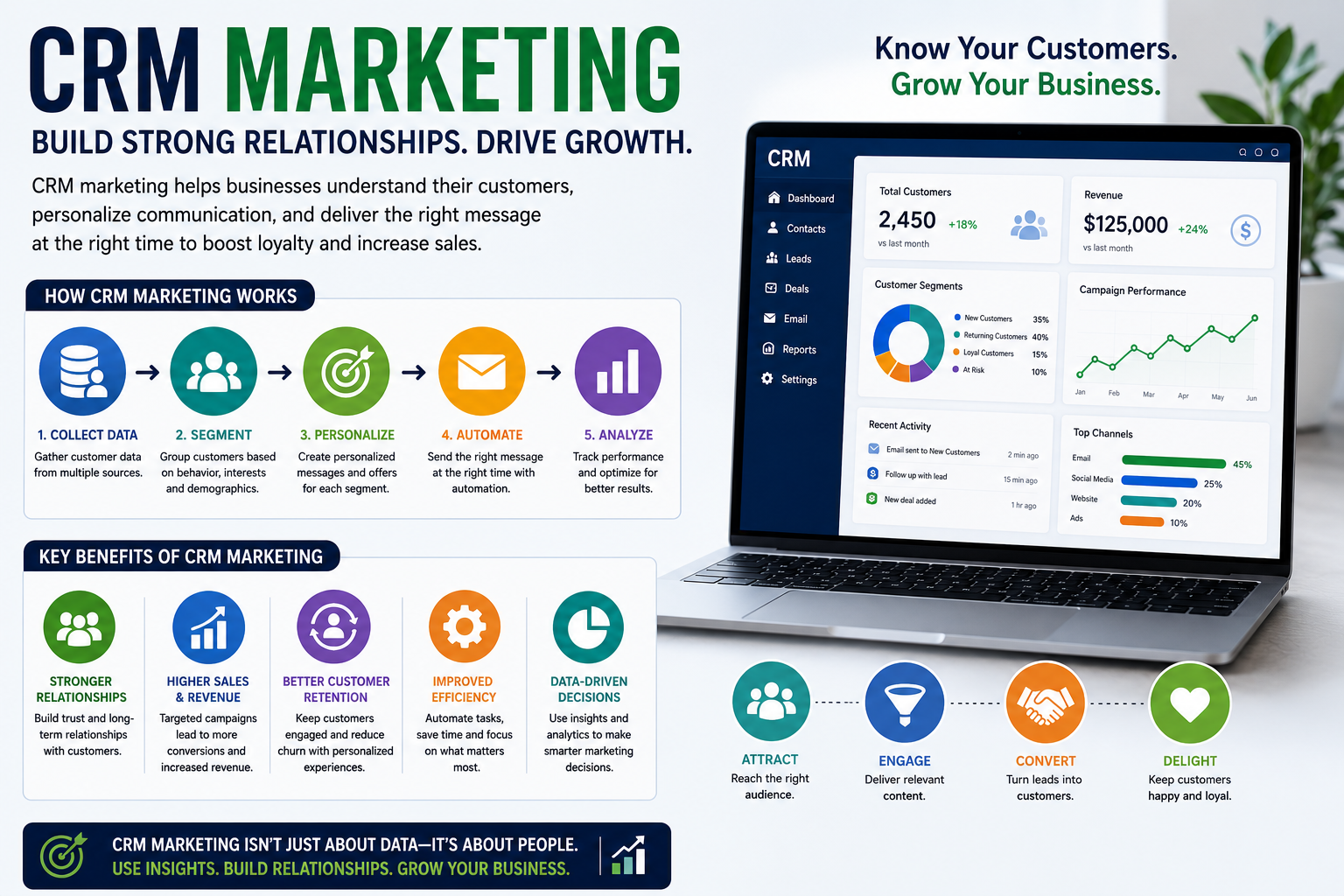
CRM marketing works by collecting customer data and turning it into actionable insights. These insights help businesses create better marketing strategies.
Data Collection
The process begins with gathering customer data from different sources such as websites, social media, emails, and purchase records. This data provides a complete view of each customer.
Segmentation
Once the data is collected, customers are grouped based on shared characteristics. This could include demographics, behavior, or purchase history. Segmentation allows marketers to target specific groups with relevant messages.
Personalization
CRM markting uses data to create personalized experiences. Instead of sending the same message to everyone, businesses can tailor content based on individual preferences.
Automation
Automation tools help businesses send the right message at the right time. For example, a welcome email can be triggered when a new customer signs up, or a follow-up message can be sent after a purchase.
Analysis and Optimization
CRM systems track campaign performance and customer behavior. This allows businesses to measure results and improve their strategies over time.
Key Benefits of CRM Marketing
CRM markting offers many advantages that help businesses grow and succeed.
Improved Customer Relationships
CRM markting helps businesses understand their customers better. By tracking interactions and preferences, companies can build stronger relationships and improve customer satisfaction.
Increased Sales and Revenue
When marketing messages are personalized and relevant, customers are more likely to engage and make purchases. CRM markting helps businesses identify opportunities to upsell and cross-sell products.
Better Customer Retention
Keeping existing customers is often more cost-effective than acquiring new ones. CRM markting helps businesses stay connected with their customers and keep them engaged over time.
Enhanced Marketing Efficiency
With automation and data insights, CRM marketing reduces manual work and improves efficiency. Marketers can focus on strategy instead of repetitive tasks.
Data-Driven Decision Making
CRM systems provide valuable insights that help businesses make informed decisions. This leads to better marketing strategies and improved results.
CRM Marketing Strategies That Work
To get the most out of CRM markting, businesses need to use the right strategies.
Personalized Email Campaigns
Email marketing becomes much more effective when it is personalized. CRM data allows businesses to send tailored messages based on customer behavior and preferences.
For example, an online store can send product recommendations based on previous purchases. This increases the chances of repeat sales.
Customer Journey Mapping
Understanding the customer journey helps businesses identify key touchpoints where engagement matters most. CRM markting allows companies to track these interactions and optimize the experience.
Lead Nurturing
Not all leads are ready to buy immediately. CRM marketing helps businesses nurture leads through targeted content and follow-ups until they are ready to make a decision.
Behavioral Targeting
CRM systems track how customers interact with a brand. This data can be used to create campaigns based on specific actions, such as visiting a product page or abandoning a cart.
Loyalty Programs
Rewarding loyal customers is a great way to keep them engaged. CRM markting helps businesses manage loyalty programs and track customer participation.
Real-Life Example of CRM Marketing Success
Consider a small e-commerce business that sells skincare products. Before using CRM marketing, the company sent generic emails to all customers. The results were average, with low engagement rates.
After implementing a CRM system, the business started segmenting customers based on skin type and purchase history. They sent personalized product recommendations and follow-up emails.
Within a few months, the company saw a significant increase in email open rates, higher conversion rates, and improved customer retention. This shows how CRM markting can deliver real results.
CRM Marketing for Small Businesses
CRM marketing is not just for large companies. Small businesses can benefit just as much, if not more.
For small businesses, building strong customer relationships is essential. CRM markting helps create personalized experiences that make customers feel valued.
Affordable CRM tools make it easy for small businesses to get started. Even simple automation and segmentation can have a big impact on marketing performance.
Small businesses can also use CRM markting to compete with larger brands by offering better customer experiences.
Choosing the Right CRM Marketing Tool
Selecting the right CRM system is important for success. Businesses should look for tools that offer features such as contact management, automation, analytics, and integration with other platforms.
Ease of use is also important. A complex system can slow down your team and reduce productivity. It is better to choose a tool that is simple and user-friendly.
Scalability is another key factor. As your business grows, your CRM system should be able to handle more data and advanced features.
Common Challenges in CRM Marketing
While CRM markting offers many benefits, it also comes with challenges.
One common issue is poor data quality. Inaccurate or outdated data can lead to ineffective campaigns. Businesses need to ensure that their data is clean and up to date.
Another challenge is lack of strategy. Simply using a CRM system is not enough. Businesses need a clear plan to use the data effectively.
Integration can also be a problem. CRM systems need to work with other tools such as email platforms and analytics software. Without proper integration, data can become fragmented.
Training is another important factor. Teams need to understand how to use the CRM system effectively to get the best results.
The Role of Automation in CRM Marketing
Automation is a key part of CRM marketing. It helps businesses save time and improve efficiency.
With automation, repetitive tasks such as sending emails or updating records can be handled automatically. This allows marketers to focus on strategy and creativity.
Automation also ensures consistency. Customers receive timely and relevant messages without delays.
For example, an automated workflow can send a series of emails to new subscribers, guiding them through the customer journey.
CRM Marketing and Customer Experience
Customer experience plays a crucial role in business success. CRM marketing helps improve this experience by providing personalized and timely interactions.
When customers feel understood and valued, they are more likely to stay loyal to a brand. CRM marketing ensures that every interaction is relevant and meaningful.
It also helps businesses respond quickly to customer needs. Whether it is answering a query or resolving an issue, CRM systems provide the information needed to deliver better service.
Future Trends in CRM Marketing
CRM marketing continues to evolve with new technologies and trends.
Artificial intelligence is becoming a major part of CRM systems. It helps analyze data and predict customer behavior, allowing for more accurate targeting.
Omnichannel marketing is another important trend. Customers interact with brands across multiple channels, and CRM marketing helps create a seamless experience across all of them.
Data privacy is also gaining importance. Businesses need to handle customer data responsibly and comply with regulations.
As technology advances, CRM marketing will become even more powerful and essential for businesses.
Conclusion
CRM marketing is more than just a tool. It is a strategy that helps businesses build strong relationships, improve customer experiences, and drive long-term growth.
By using customer data effectively, businesses can create personalized campaigns that resonate with their audience. This leads to higher engagement, better retention, and increased revenue.
If you want to stay competitive in today’s digital world, investing in CRM marketing is a smart move. Start by choosing the right system, developing a clear strategy, and focusing on delivering value to your customers.
Take action today and transform the way you connect with your audience through CRM marketing.
FAQs
What is CRM marketing in simple terms?
CRM marketing is the use of customer data to create personalized marketing campaigns that improve relationships and drive sales.
How does CRM marketing increase sales?
It increases sales by targeting the right audience with relevant messages, improving engagement, and encouraging repeat purchases.
Is CRM marketing suitable for small businesses?
Yes, CRM marketing is highly beneficial for small businesses because it helps build strong customer relationships and improve marketing efficiency.
What are the key features of CRM marketing tools?
Key features include contact management, automation, analytics, segmentation, and integration with other marketing platforms.
How long does it take to see results from CRM marketing?
Results can vary, but many businesses start seeing improvements in engagement and conversions within a few months of implementation.
