
Learn modern tech stack best practices in 2026 with 7 proven strategies to improve scalability, performance, and system efficiency.
Introduction
Technology never stands still. Every year, new tools, frameworks, and platforms change how we build digital products. Businesses that fail to adapt often fall behind. That’s why understanding the modern tech stack is no longer optional—it’s essential.
Building a modern tech stack in 2026 requires more than just choosing the latest tools—it demands a strategic approach focused on scalability, performance, and long-term efficiency. As applications grow and user expectations increase, businesses must adopt best practices that ensure fast performance, seamless integration, and reliable infrastructure. From cloud-native solutions to microservices architecture, the right tech stack can make or break your product. In this guide, we’ll explore 7 key best practices to help you build a scalable, high-performing, and future-ready technology stack.
As businesses and digital platforms continue to grow, building scalable systems has become a critical priority for developers, startups, and enterprises alike. A modern tech stack provides the foundation for creating applications that can handle increasing traffic, support rapid development, and deliver reliable performance.
From cloud infrastructure and microservices to modern frameworks and automation tools, the right technology choices can significantly impact scalability, security, and long-term success. In this guide, we’ll explore seven proven ways to leverage a modern tech stack to build scalable, efficient, and future-ready systems in 2026.
A modern tech stack is more than just a collection of tools. It is a carefully selected ecosystem that allows teams to build faster, scale easily, and deliver seamless user experiences. Whether you’re launching a startup, running an e-commerce platform, or managing enterprise software , the right stack can define your growth.
In this guide, you will learn what a modern tech stack is, how it works, and how to choose the best one for your needs.
What Is a Modern Tech Stack?
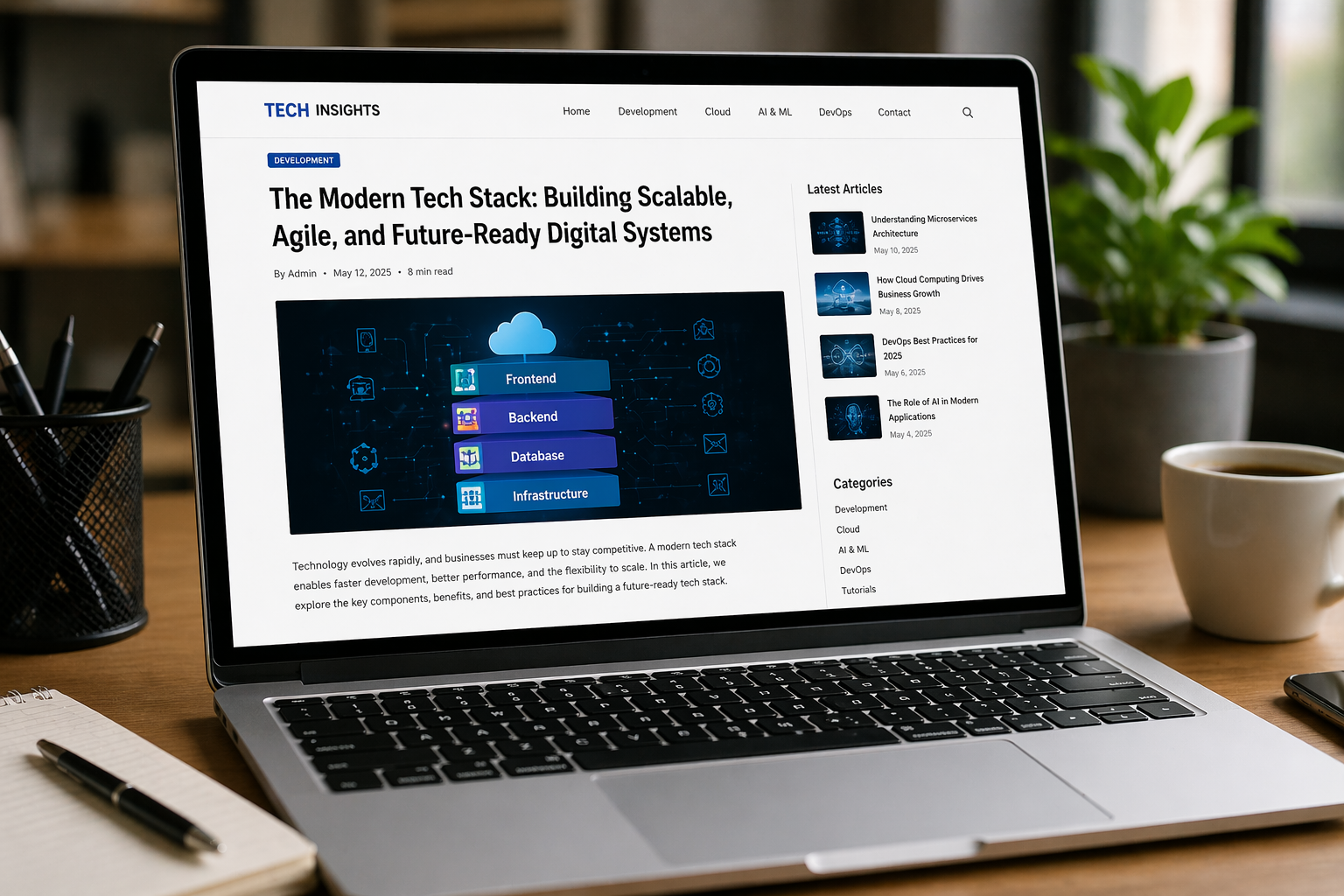
A tech stack refers to the technologies used to build and run an application. It includes frontend tools, backend systems, databases, infrastructure, and deployment processes.
A modern tech stack focuses on flexibility, cloud computing, and modular design. Instead of relying on large, monolithic systems, modern applications are built using smaller, connected components.
This approach allows developers to update specific parts of an application without affecting the entire system. It also improves speed, performance, and scalability.
Why Modern Tech Stacks Are Important
Today’s users expect fast, reliable, and smooth digital experiences. If your app is slow or crashes often, users will leave—and they may not come back.
A modern tech stack helps businesses meet these expectations. It supports rapid development, continuous updates, and better performance.
It also allows teams to respond quickly to market changes. You can launch new features, fix issues, and test ideas without major delays.
In a competitive market, speed and adaptability are key advantages.
Key Components of a Modern Tech Stack
Frontend Development
The frontend is the part of the application users interact with. It includes everything from layout and design to buttons and animations.
Modern frontend development focuses on speed and responsiveness. Frameworks like React, Vue, and Angular are widely used because they make it easier to build interactive user interfaces.
These tools use reusable components, which saves time and ensures consistency across the application.
A fast and clean frontend improves user experience, which directly impacts engagement and conversions.
Backend Development
The backend is responsible for handling logic, processing data, and managing server operations.
Modern backend technologies include Node.js, Python, Ruby, and Go. These languages are powerful and efficient for building scalable applications.
Instead of using a single large system, many developers now use microservices. Each service performs a specific function, making the system easier to manage and update.
This structure also reduces the risk of system-wide failures.
Databases and Data Management
Data plays a central role in modern applications. Choosing the right database is critical.
SQL databases like PostgreSQL and MySQL are ideal for structured data. NoSQL databases like MongoDB are better for flexible and unstructured data.
Many modern systems use a hybrid approach, combining both types to meet different needs.
Efficient data management improves performance and helps businesses make better decisions.
Cloud Computing and Infrastructure
Cloud platforms have transformed how applications are built and deployed.
Services like AWS, Google Cloud, and Microsoft Azure allow businesses to scale resources based on demand. This means you don’t need to invest in expensive hardware upfront.
Cloud computing also improves reliability. Applications can run across multiple servers, reducing downtime.
It enables global access, allowing users from different regions to experience fast performance.
DevOps and Automation
DevOps practices are a key part of modern tech stacks. They focus on improving collaboration between development and operations teams.
Tools like Docker and Kubernetes help manage applications and ensure consistency across environments.
Automation plays a big role here. Continuous integration and continuous deployment allow teams to release updates quickly and safely.
This reduces errors and speeds up development cycles.
Emerging Trends in Modern Tech Stacks
API-Driven Development
APIs are the backbone of modern applications. They allow different systems to communicate with each other.
An API-first approach ensures that applications are flexible and easy to integrate with other tools.
This is especially useful for businesses that rely on multiple platforms and services.
Headless Architecture
Headless architecture separates the frontend from the backend.
This allows businesses to deliver content across different platforms, including websites, mobile apps, and smart devices.
It also improves performance and gives developers more freedom in design and development.
Serverless Computing
Serverless computing removes the need to manage servers.
Developers can focus on writing code while the cloud provider handles infrastructure.
This reduces operational costs and simplifies scaling.
It is especially useful for startups and growing businesses.
Artificial Intelligence Integration
AI is becoming a standard part of modern tech stacks.
It helps automate processes, analyze data, and improve user experiences.
From chatbots to recommendation systems, AI adds value across many applications.
How to Choose the Right Tech Stack
Choosing the right stack depends on several factors.
First, understand your project requirements. A simple website does not need the same tools as a large-scale platform.
Second, consider your team’s expertise. Using familiar technologies can save time and reduce errors.
Third, think about scalability. Your stack should support future growth without major changes.
Finally, consider cost. Cloud-based solutions offer flexibility, but expenses can grow if not managed properly.
Real-World Example
A mid-sized SaaS company struggled with slow performance and frequent downtime. Their monolithic system made updates difficult.
They switched to a modern tech stack using microservices, a cloud platform, and automated deployment tools.
Within months, they saw significant improvements. Their application became faster, more reliable, and easier to update.
Customer satisfaction increased, and the company was able to launch new features more frequently.
The Connection Between Tech Stack and Marketing
Technology plays a major role in modern marketing .
A strong tech stack enables data tracking, personalization, and automation. This helps businesses understand their customers and deliver better experiences.
For companies working with the best account based marketing marketing agency, a modern stack is essential. These agencies rely on advanced tools to target specific accounts and create personalized campaigns.
Without the right technology, it is difficult to achieve these results.
Challenges in Adopting a Modern Tech Stack
Despite its benefits, adopting a modern tech stack comes with challenges.
One major issue is complexity. There are many tools available, and choosing the right ones can be overwhelming.
Integration is another challenge. Not all tools work seamlessly together.
There is also a learning curve. Teams may need training to use new technologies effectively.
However, with proper planning and strategy, these challenges can be managed.
Best Practices for Success
Start with a clear plan. Define your goals and choose tools that align with them.
Avoid overcomplicating your stack. Use only what you need.
Focus on performance and user experience. These should guide your decisions.
Invest in security. Protecting user data is critical.
Regularly review and update your stack to keep up with new trends.
The Future of Modern Tech Stacks
The future of tech stacks is exciting and constantly evolving.
Artificial intelligence will become more integrated into applications.
Edge computing will improve performance by processing data closer to users.
Low-code and no-code platforms will make development more accessible.
Sustainability will also become a priority, with a focus on energy-efficient systems.
Businesses that stay updated with these trends will have a competitive edge.
Conclusion
A modern tech stack is the foundation of successful digital products. It enables businesses to build faster, scale efficiently, and deliver better user experiences.
Choosing the right stack requires careful planning, but the benefits are worth it.
If you want to stay ahead in today’s digital world, now is the time to evaluate your technology and embrace modern solutions.
Take the first step today and build a tech stack that supports your long-term growth.
FAQs
1. What is the best tech stack in 2026?
The best tech stack depends on your project, but cloud-native, microservices-based stacks with scalable databases are highly recommended.
2. Why is scalability important in a tech stack?
Scalability ensures your system can handle increasing users and data without performance issues.
3. What is the difference between monolithic and microservices architecture?
Monolithic architecture is a single system, while microservices break applications into smaller, independent services.
4. Is serverless architecture the future?
Yes, serverless is gaining popularity due to cost efficiency, scalability, and reduced infrastructure management.
5. How can I improve tech stack performance?
Use caching, optimize databases, adopt CDNs, and continuously monitor system performance.

1 Comment
Pingback: DreamBox Learning Founders and AI Technology: How It’s Transforming Modern Education in 2026